The truth is, I find Raquel’s proposal for this curated shelf really fun… That said, I’m not sure I’ll live up to the recommendations of my fellow resident friends.
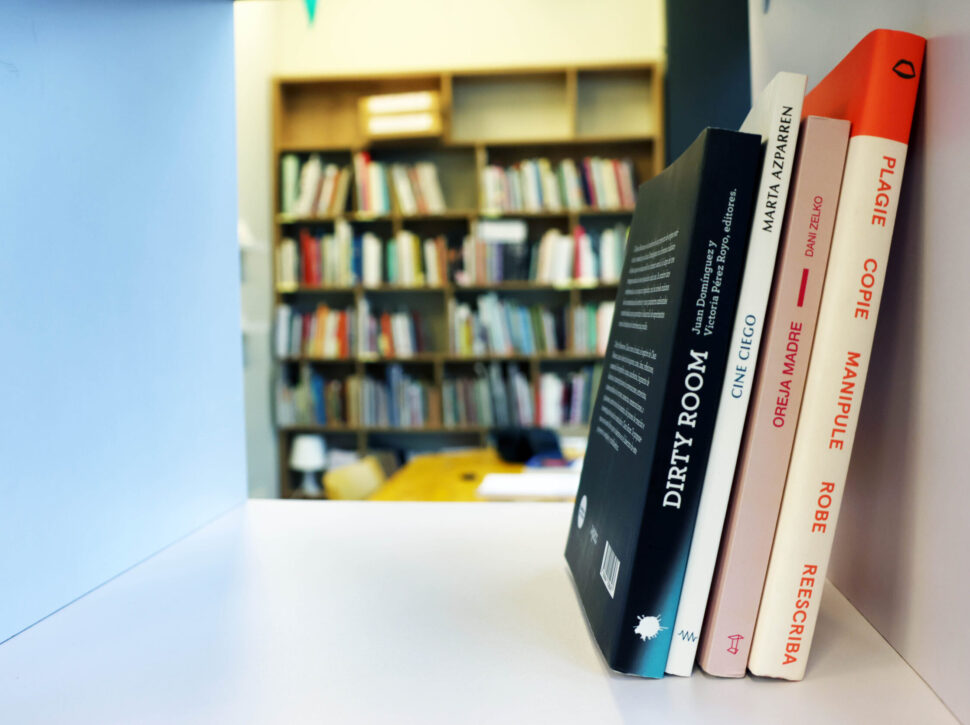
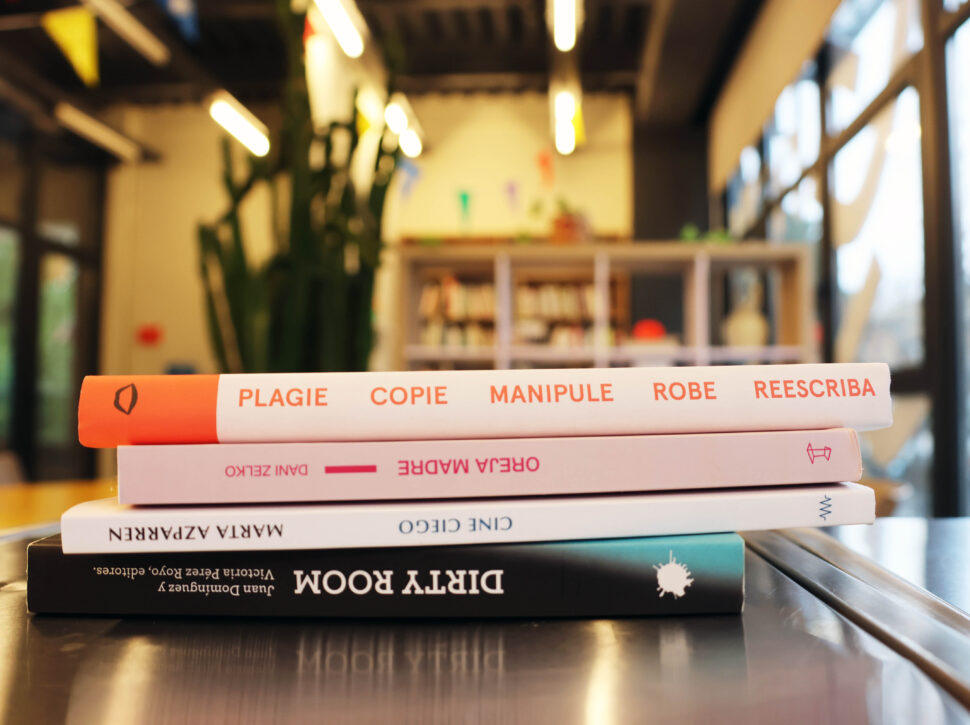
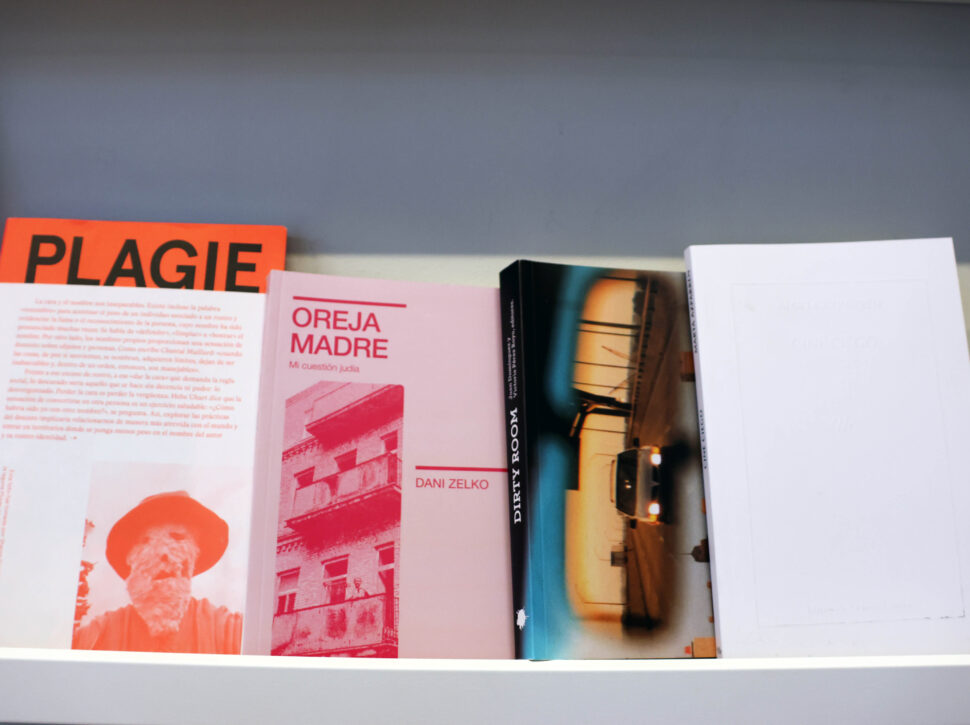
I’ll start with the easy part: recommending two titles that aren’t in the Graner catalogue but that have really affected me lately. The first is Plagie, copie, manipule, robe, reescriba este libro, no solamente by Valeria Mata. The edition I have is from Ediciones Comisura, and it’s beautiful. In this book, Valeria argues for the impossibility of owning writing and for the free circulation of words and the discourses we generate with them. What’s interesting is that it doesn’t stay within literature: she surveys different artistic disciplines in which copying has been fundamental to their development within an artistic genealogy. In an appendix to the book she writes: “perhaps writing is not about expressing an idea, but about relating a series of elements. Making connections between disparate things and fostering friendships between strange materials.”
The second book I would like to see on Graner’s shelf is Oreja Madre by the Argentine writer Dani Zelko. To read the book, it helps to know Dani’s work beforehand (although there are already many things that they themselves explain at the beginning of the book). In this account, they tell how they try to better understand their Jewish family lineage just as the Hamas attacks of October 2023 take place. In that attack, some of their relatives are murdered, and an endless series of contradictions emerges: historical, familial, political, and ideological ones, all narrated in the first person by the author. All these tensions complicate what we in Europe know about the State of Israel and the Jewish people—which it is worth remembering are dissociable elements—and, of course, Dani also reminds us that this same state continues to commit a genocide against the Palestinian people.
Finally, the two books that are already at Graner and that I want to recommend are Dirty Room, written by Juan Domínguez together with some friends, and Cine ciego: detener el flujo de las imágenes by Marta Azparren. The first because it is a classic and allowed us to rethink “the scenic,” and even to be in Clean Room without having been present at any of its editions. The second I recommend even though I haven’t read it. Careful! But I have seen Marta’s lecture with the same title and I loved it. It’s one of the most beautiful lectures I’ve ever attended—very well written and woven together. One of those things that seem simple at first glance, but that contain a depth full of intricacies. So I recommend it without having read it, and I recommend it to myself for when I pass by Graner in a few months 🙂
Javier J Hedrosa is a resident artist at Graner 2026 with the project “Prácticas coreográficas desde la apropiación y la copia”, in the critical thinking modality.
Bibliographic References:
1. Mata, Valeria. Plagie, copie, manipule, robe, reescriba este libro, no solamente. Ediciones Comisura, 2024.
2. Zelko, Dani. Oreja Madre. Caja Negra Editora, 2025.
3. Domíngez, Juan. Dirty Room. Continta me tienes, 2017.
4. Azparren, Marta. Cine ciego. Libros de la resistencia, 2023.
Read more
Read less