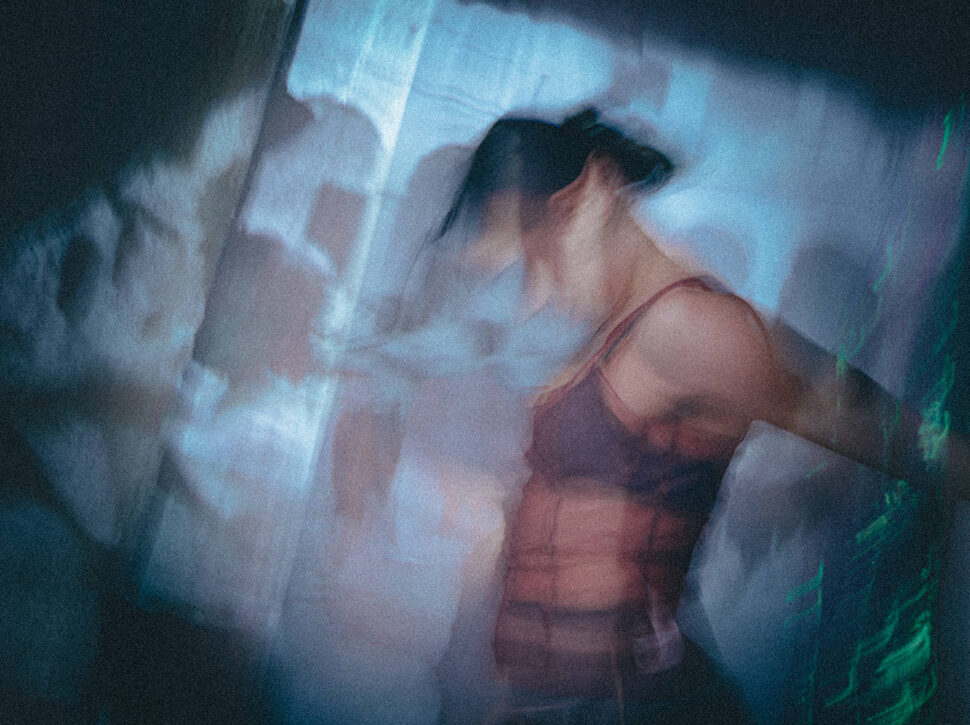

Inka Romaní

Inka Romaní is a choreographer from Valencia. She trained at the Valencia Dance Conservatory, the Centre Chorégraphique de Toulouse, and in London, where she worked at Sadler’s Wells Theatre. She received the Me, Myself & I award in 2019 and completed a Master’s degree in Artistic Production in 2022. She has led artistic mediation projects for IVAM and Centre del Carme. She has been an artist in residence at KVS (Brussels), Graner (Barcelona), La Licorera – Cali Dance Biennial, the Cité internationale des arts, and La Briqueterie (Paris). In 2024, she received a danceWEB scholarship. During the 2025–2026 period, she is an artist in residence at K3 (Hamburg).

www.inkaromani.com
@inkaromani

Latest project in residence

Un desig al cos (2026) is a mediation project developed within El demonio del cuerpo, a research-creation project that explores censorship and the violence exerted on women’s bodies during the Franco dictatorship in Spain. Addressed to women over the age of 70, the project proposes a space for gathering based on collective practice and movement. Through bodily exercises, shared memory, and listening, a sensitive and non-institutionalized archive is activated, challenging the imaginaries imposed by the Sección Femenina: the instrumentalization of dance and gymnastics as tools of propaganda and discipline of the female body. The project opens up possibilities to de-domesticate bodies and to imagine other forms of transmission and presence.

Photos © Fran Garofalo

Graner Residency Archive

  • 2026 · Open call · Un desig al cos
  • 2025 · Cross-residency with la Briqueterie – CDCN du Val de Marne – El demonio del cuerpo (with the support of the Institut Ramon Llull as part of its international residency support program).
  • 2024 · Open call · Fandango reloaded
  • 2024 · Cross-residency with Roca Umbert Fàbrica de les Arts · Fandango reloaded

Residency videos

Publications

Inka Romaní collects in this publication materials from the research that led to the piece Fandango Reloaded and adds her own texts and collaborations to deepen the themes of archives, memory, and traditional dances and songs.